Documentary film production in Scotland draws on a distinctive combination of resources: an extraordinary physical landscape, a depth of human story across the country’s rural, coastal and sporting communities, and a small number of producers who genuinely understand both the form and the terrain. If you are approaching a documentary commission here, whether for broadcast, online distribution or a brand or institutional context, there are things worth understanding about how the process differs from standard commercial video, and what that difference means for your brief and your budget.
What makes documentary film production in Scotland different
The most fundamental distinction between documentary and commercial production is that a documentary does not start with a finished message. Commercial video of any kind, from brand films and destination campaigns to product films, begins with a communications objective and works backward from it. Documentary begins with a subject that is worth exploring, and the structure follows from what is discovered in the exploration.
That difference is consequential in practice. It means pre-production is heavier, because research and access-building happen before a camera moves. It means the shooting schedule must accommodate what the subject does, not what the production requires. And it means the edit is where the film finds its final shape, rather than simply executing a plan agreed in advance. A documentary that has been forced into a predetermined structure before filming is almost never as strong as one that was allowed to discover its own.
This does not mean documentary is undisciplined. It means the discipline is located differently: in the rigour of research, in the quality of access, in the patience to wait for the moments that matter rather than manufacturing them.
Scotland’s particular contribution to all of this is that it offers subjects worth making documentaries about. The sporting culture, the landscape, the community life of the rural Highlands and Islands, the human stories embedded in the working coast and the hill country: these are subjects with genuine depth and visual substance. A documentary about steep skiing is more interesting at Glenshee than in a wind tunnel. A film about community resilience lands differently on the Cateran Trail in highland Perthshire than in a committee room. Place is argument in documentary production, and Scotland has exceptional places.
The kinds of documentary Morrocco Media produces
Our documentary film production in Scotland spans several distinct types of commission.
Sport and adventure documentary is where Morrocco Media has its deepest roots. Comfort Zones, shot at Glenshee and in the Cairngorms, explored the psychology of steep skiing through the perspectives of the athletes who pursue it and two academic philosophers, Dr Philip Ebert and Professor Laurie Paul, who study the ethics and phenomenology of risk. The film sits at the intersection of landscape cinematography, sport documentary and philosophical inquiry. It required access to elite ski mountaineers, patience to wait for conditions in high mountain terrain, and an edit that held the intellectual and physical dimensions of the subject in balance.
Community and social documentary covers the kind of work we produced for Cateran Ecomuseum as part of the Caterans Commonwealth initiative, a community-led project celebrating the shared cultural, environmental and economic assets of the Cateran Trail area in highland Perthshire. These films required a different kind of access: to communities, to individuals invested in a collective project, and to the slow processes of cultural development that do not resolve themselves in a single filming day. The approach was observational: unhurried, attentive to detail, conscious that the film existed to serve the people on screen rather than a predetermined editorial point.
Charitable and impact documentary includes Calling Out at Christmas, a film we produced for STAR Siblings Reunited, a Fife-based charity that reunites brothers and sisters separated through the care system. Filming of this kind demands that the filmmaker’s first commitment is to the people on screen, not to the brief. That priority shapes every decision: how long you spend with contributors before the camera is switched on, how you structure an interview, how you construct the edit so that the subject’s own words carry the story rather than being shaped to serve it.
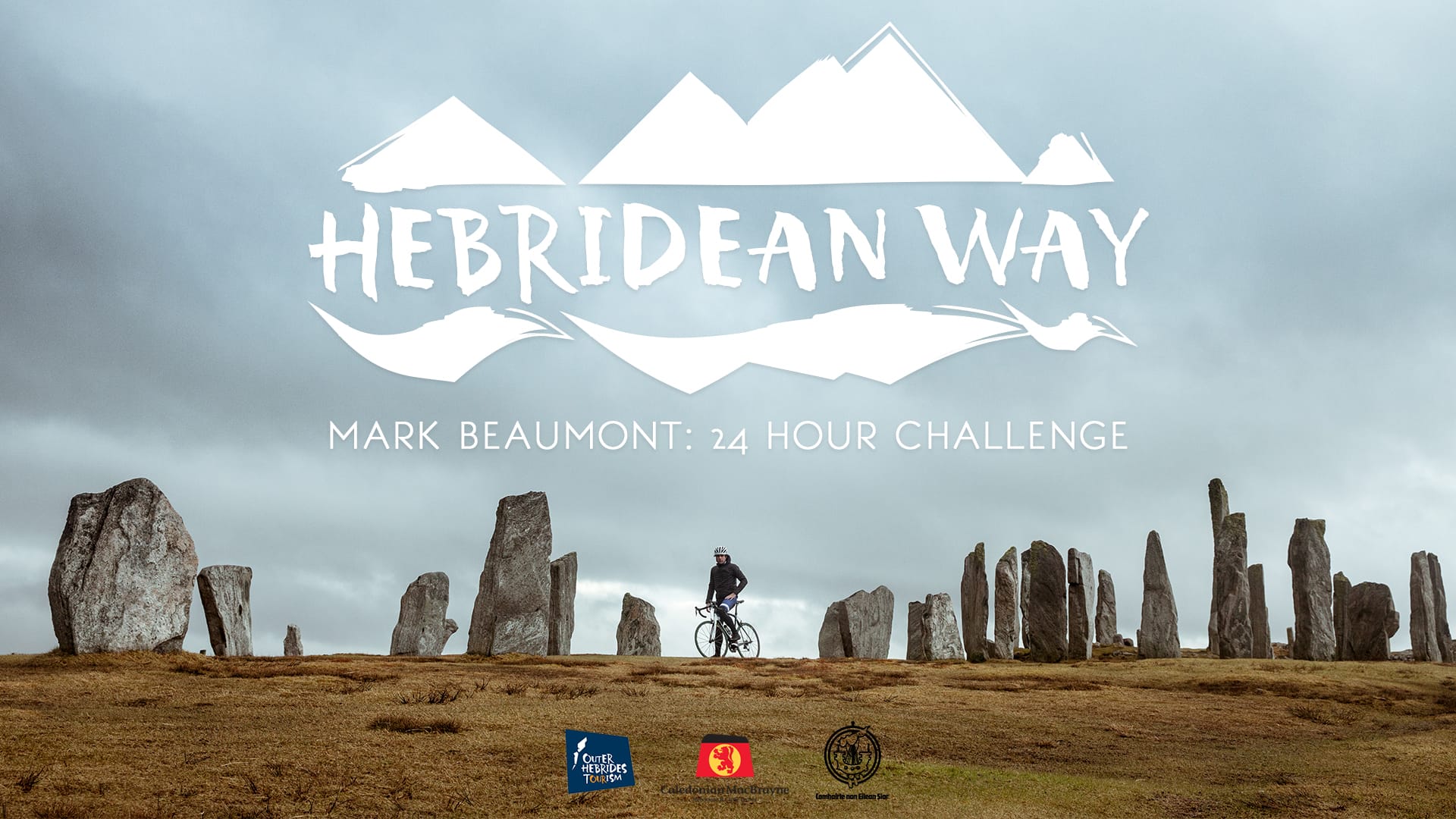
Long-form brand and tourism documentary occupies the boundary between documentary and commercial production. These are extended films that tell a real story with cinematic rigour, serving a client’s communications objective without betraying the integrity of the form. The film we made for Outer Hebrides Tourism Association, which followed Mark Beaumont’s attempt to cycle the Hebridean Way in under 24 hours, is a good example: a film that serves a tourism organisation’s brief while operating entirely within the conventions of sports documentary.
What documentary production costs
Documentary is not priced differently from other production work. The same all-inclusive day rates apply. The distinction is that documentary typically requires more days, both in filming and in post-production, than a commercial commission of comparable finished length.
A ten-minute documentary may involve three to five filming days (gathering observational material, conducting extended interviews, building the sequences that carry the story between interview passages) and four to seven days in the edit (assembly, structure, fine cut, grade and sound). A twenty-five-minute broadcast documentary is more complex again. Every brief is different, and we provide detailed quotes based on a specific project. Commissioners should plan for documentary to cost proportionally more than its finished running time might suggest, because the ratio of material shot to material used is typically far higher than in commercial production.
When to come to Morrocco Media, and when to consider Quiet Eye Productions
Morrocco Media takes on documentary commissions across all the types described above. Quiet Eye Productions Ltd, the sister company we co-founded in 2024, focuses specifically on broadcast-standard sport documentary and adventure film commissions with the editorial complexity and duration that place them firmly in the broadcast or festival category.
If you are unsure which fits your project, the answer is to make contact early. We advise openly on where a project sits, and we would rather decline a commission than accept one we are not the right home for. The boundary between Morrocco Media and Quiet Eye is not a commercial one. It is a question of whether the project is best served by one company’s experience or the other’s.
What the development process looks like
For any substantial documentary commission, the process begins with a conversation about the subject, the intended audience and the delivery context. This leads to a development phase in which Morrocco Media researches the subject, builds access with potential contributors, and produces a treatment: a document that sets out the film’s proposed structure, the contributors involved, the locations required and the specific moments the production hopes to capture.
The treatment is the point at which a documentary commission either becomes viable or needs to be reconceived. We do not begin filming documentary work without one. A good treatment has a real protagonist, a credible arc, locations that can actually be filmed and access that has been confirmed. That treatment is the foundation of a production that can be budgeted, scheduled and managed. A treatment that does not hold up is better discovered in development than on location.
Frequently asked questions
What is the difference between a documentary and a corporate film?
A corporate film begins with a message to communicate and works backward from it. A documentary begins with a subject worth exploring and lets the structure emerge from the material. In practice, many commissions sit somewhere between the two: they have a client purpose but handle it through documentary methods, with real contributors, observational filming and a story that unfolds rather than a message that is simply illustrated. We work across the full spectrum and advise honestly on where any particular project sits.
How long does documentary production take?
Timelines depend on the scale and complexity of the project. A ten-to-fifteen-minute online documentary typically requires a development period of four to six weeks, a filming phase of two to four days (sometimes spread across several weeks to capture the right material at the right moment), and an edit of three to five weeks. Broadcast-format documentaries require longer timelines at every stage. We discuss realistic scheduling at the first conversation, not after a contract has been signed.
Can you film documentary subjects in remote Scottish locations?
Yes. Operating in remote terrain is a core capability. We have filmed in the Cairngorms, the Outer Hebrides, the Kintyre peninsula and across highland Perthshire in conditions that require a self-sufficient crew, carrying the right kit, managing risk in the field, and not needing to be guided to the subject or briefed on the activity being filmed. That self-sufficiency matters in documentary work where the most important moments tend to happen in places that are not easy to reach.
Do you work with broadcast commissioners?
We have produced content for the BBC and work across the full range of documentary delivery contexts: broadcast, online, festival, institutional and brand. Where a project has the scale and editorial format of a broadcast commission, we advise whether it sits better with Morrocco Media or with Quiet Eye Productions, our sister company specialising in broadcast sport documentary and adventure film.