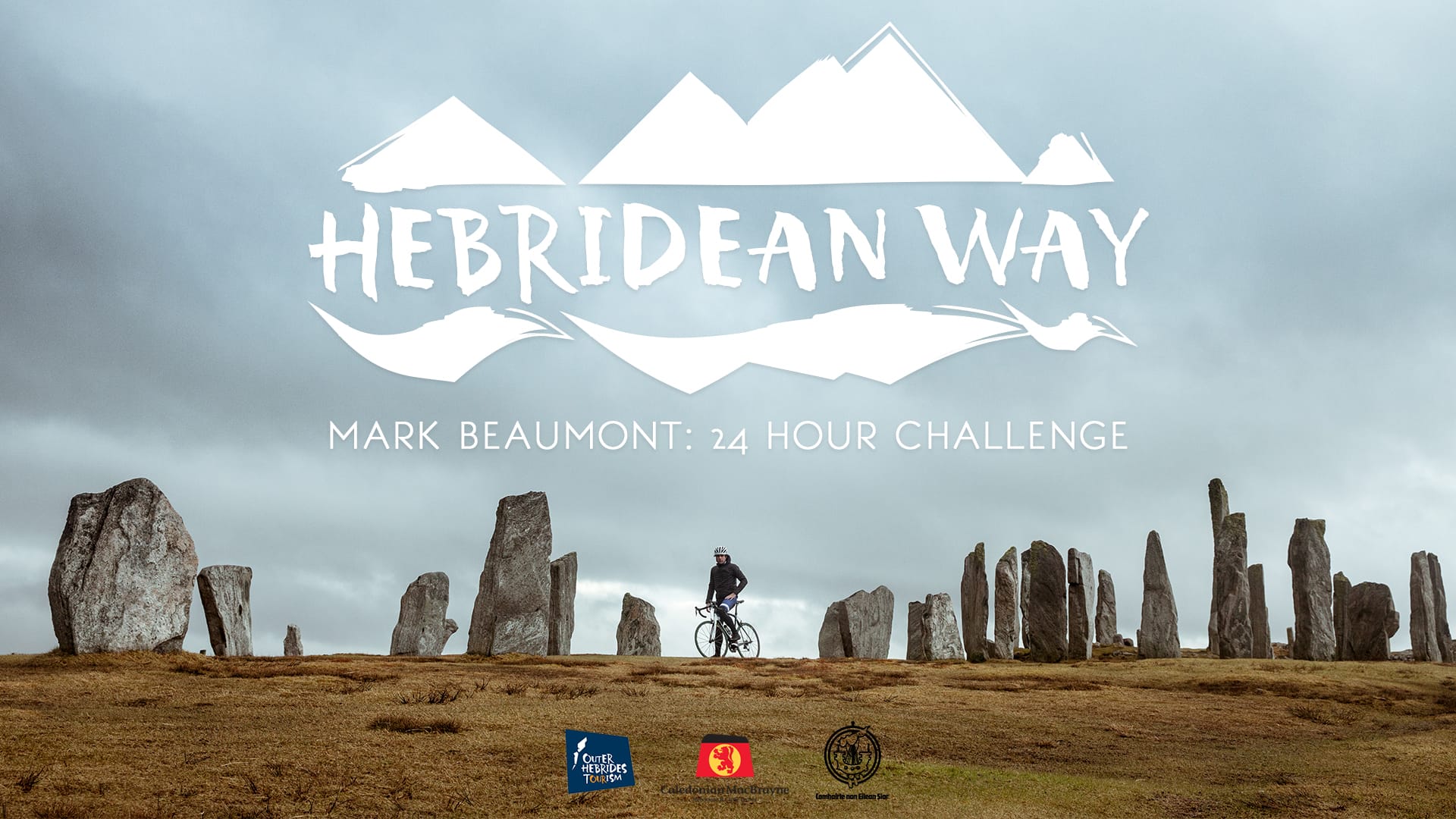
Filming in the Outer Hebrides is unlike any other production experience in Scotland. The islands, Lewis and Harris in the north with the Uists, Benbecula and Barra stretching south, offer a quality of light and landscape that rewards the filmmakers willing to navigate their considerable logistical demands. After producing work for Outer Hebrides Tourism Association, including the landmark 24 Hours: Mark Beaumont Rides the HebWay, we have learned what these islands offer, what they withhold, and what you need to do to earn their best conditions. This is a practical guide for tourism and documentary productions considering the Outer Hebrides.
What makes filming in the Outer Hebrides different
The Outer Hebrides sit on the Atlantic edge of Europe, and that geography shapes everything about the light and weather. The islands stretch roughly 130 miles from the Butt of Lewis in the north to Barra Head in the south, connected internally by a series of causeways and ferry crossings. There are no major urban centres, almost no light pollution, and critically nothing between the west coast and the open Atlantic Ocean. The weather that arrives here has been building since North America. When it is good, it is extraordinary. When it is not, it is uncompromising.
That same remoteness and exposure is the source of the islands’ cinematic power. The light in the Outer Hebrides has a quality that photographers and filmmakers return to repeatedly: wide, diffuse, reflected from both sea and sky, shifting with extraordinary speed as Atlantic cloud systems move through. On a clear day after a weather front has passed, the light on the machair of South Uist or across the sound toward Harris has a luminosity that no other part of Scotland reliably produces.
Key locations and what they offer
Lewis and Harris form a single landmass separated by geography and character. Lewis in the north is flatter, moorland-dominated, with the Atlantic pounding the west coast cliffs at Mangersta and the extraordinary prehistoric complex at Callanish, the standing stones that produce striking images in almost every light. Harris in the south has some of the finest beaches in Europe on its Atlantic coast (Luskentyre and Scarista among them), backed by hills that turn russet and gold in autumn, with the Harris Hills providing a mountain element that the rest of the islands lack.
North Uist, Benbecula and South Uist are connected by causeway to form a chain of islands characterised by machair, a rare flower-rich coastal grassland found almost nowhere else in the world, and vast inter-tidal flats that catch the sky at low water. These islands are exceptional for wildlife filming; the combination of breeding waders, corncrakes and migrating geese, framed against the Western Isles horizon, gives tourism and natural history productions something genuinely irreplaceable.
Barra, the southernmost inhabited island of any size, adds Traigh Mhòr, the only commercial beach-landing airstrip in the world, and a compactness that makes it manageable for a small crew in a single shoot day, weather permitting.
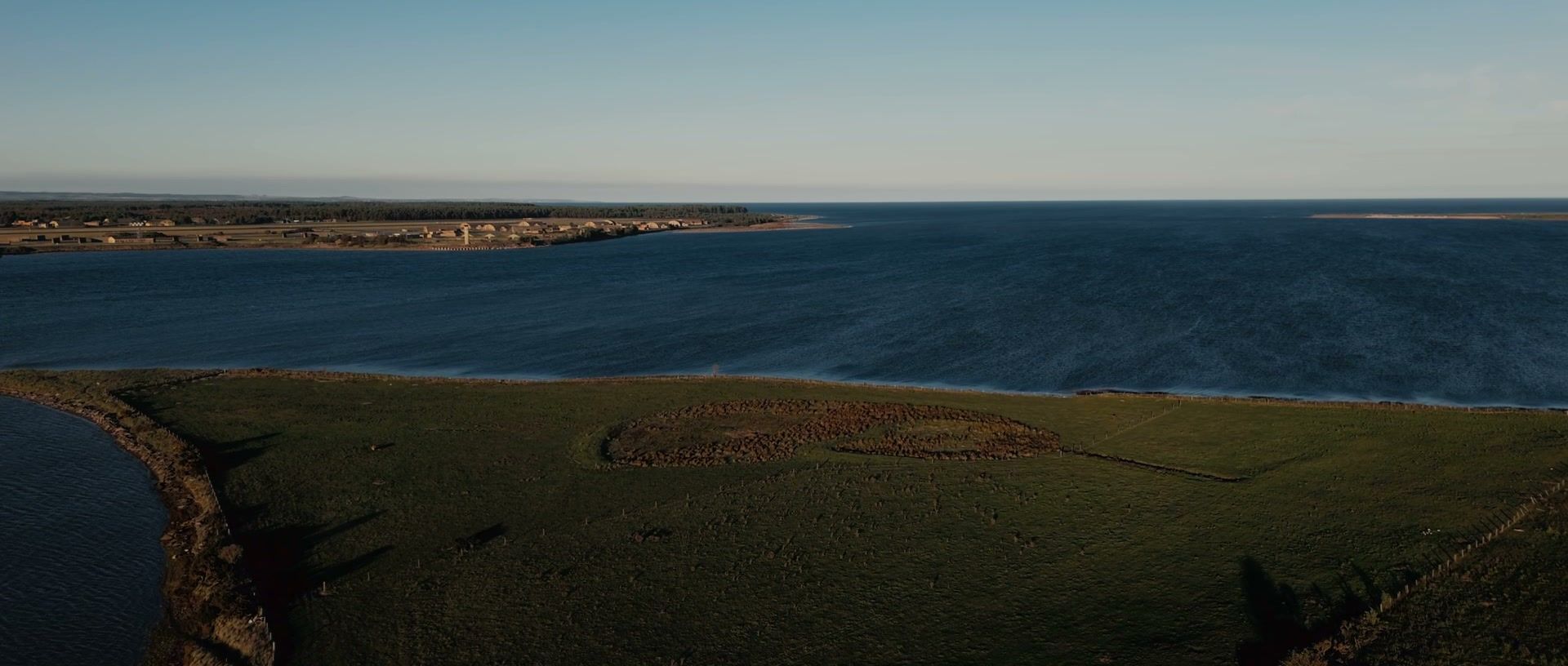
The causeways that connect many of the islands are a cinematic gift. Long, straight, running across open water with sky reflected on both sides, they have a scale and geometry that drone footage captures extraordinarily well. The causeways formed the backbone of the HebWay film, where aerial footage of Mark Beaumont cycling across them at different points in his 24-hour record attempt established the geography of the challenge more powerfully than any map could.
Ferry logistics: what every production needs to plan around
The most important practical reality of filming in the Outer Hebrides is that you must plan around CalMac ferry timetables. The main vehicle ferry services connect Ullapool to Stornoway (Lewis), Uig to Tarbert (Harris) and Lochmaddy (North Uist), and Oban to Castlebay (Barra) and Lochboisdale (South Uist). These sailings are finite in number, and crossing times range from one hour forty-five minutes to five hours.
A missed ferry does not just cost the cost of the sailing. It costs the crew a night’s accommodation and a day of paid time on the wrong side of the Minch. Productions that do not build adequate ferry contingency into the schedule routinely lose their best shooting windows to the wrong side of a sailing timetable.
The crossing timings also affect the quality of arrival. The Ullapool to Stornoway crossing passes through some of the most dramatic sea scenery on Scotland’s west coast and can be filmed from the deck in good conditions, which is a practical bonus. The longer Oban to Barra crossing traverses the Sound of Mull and past the Small Isles, and is worth planning as a shoot day in its own right if conditions allow.
The case for winter and shoulder-season filming
As with the rest of the Scottish west coast, the instinct is to film in the Outer Hebrides in summer, when the days are long and the ferries run more frequently. Summer is productive, but it is not the islands at their most cinematic. The light is high and often flat; the famous Hebridean beaches are sometimes busy; and the dramatic, moody conditions that define the most powerful island footage are less common.
Between October and March, the low sun rakes across the Harris Hills and the Lewis moorland at the kind of angle that summer reserves for minutes around dawn and dusk. The beaches are empty. The machair, though past its flowering peak, holds its own winter character. And when the Atlantic weather is at its most dramatic, it creates conditions of genuine visual power that cannot be replicated.
This is not a recommendation to film in a gale. It is a recommendation to plan for flexibility. The crew that can move a shoot day when the forecast breaks, and hold position for a clear, cold window after the front has passed, comes away with footage that the crew locked to a fixed summer schedule rarely sees.
Practical considerations for a Hebridean shoot
Equipment must be weather-sealed. Wind is a constant variable across the Outer Hebrides, and coastal and hillside locations expose both cameras and drones to conditions they would never face in a studio or a city. Our drone fleet is specified for the kind of sustained wind that the Argyll coast and the Outer Hebrides routinely produce, and we would not attempt aerial work here with equipment not rated for it.
Drone flying in the Outer Hebrides requires the same CAA registration and commercial permissions as any other Scottish location, with the additional consideration that wind speed frequently exceeds safe operating limits for smaller, less capable UAVs. Know your aircraft’s limitations before committing to aerial footage as a production cornerstone.
Accommodation and hospitality infrastructure on the islands is good but finite. Planning around school holidays, island events and the summer peak matters more in the Outer Hebrides than on the mainland.
Bringing it together
The Outer Hebrides reward the prepared and patient filmmaker with conditions that no other part of the UK can offer. The logistics are real, the weather is uncompromising, and the ferries run on their own schedule. But the filmmakers who embrace all of this, who plan around the tides and crossings, who wait for the light rather than settling for what is available on a fixed shoot day, produce work that stands immediately apart.
For tourism and documentary commissions involving the Outer Hebrides, our tourism video production service explains how we approach location work of this kind across Scotland’s west coast and islands.
Frequently asked questions
How long does it take to get to the Outer Hebrides for a shoot?
Driving to Ullapool from central Scotland takes approximately two and a half to three hours, followed by a one-hour-forty-five-minute ferry to Stornoway. The Oban route, serving the southern islands, is longer; allow five to six hours from central Scotland including the ferry crossing. Build in travel time as part of the production budget, not as an afterthought.
Is drone filming practical in the Outer Hebrides?
Yes, with the right equipment and realistic planning. Wind is the primary constraint. A drone rated for sustained coastal wind can produce extraordinary footage: causeways, beaches, cliffs and open water all deliver exceptional aerial material. A drone that is not rated for wind should not be deployed on the Atlantic coast. All Morrocco Media aerial work is carried out with CAA-registered equipment specified for challenging conditions.
What time of year is best for filming in the Outer Hebrides?
Every season has its character. Summer offers long days, accessible ferries and the flowering machair at its best. Autumn delivers low light, turning colours on the Harris Hills and, if you are fortunate, dramatic Atlantic weather with breaks of extraordinary clarity. Winter is for the committed crew willing to accept short shooting windows in exchange for the most powerful light Scotland produces anywhere. Spring is clear, fresh and often overlooked. The honest answer is that the best time is whenever you have the flexibility to wait for the conditions rather than being locked to a fixed date.